Why This Is Different From Performance Max
Before the data, one distinction worth making clearly: AI Max is not Performance Max.
Performance Max replaced Shopping, Display, and Discovery campaigns. It runs across all of Google’s inventory simultaneously and gives advertisers very limited visibility into where spend goes.
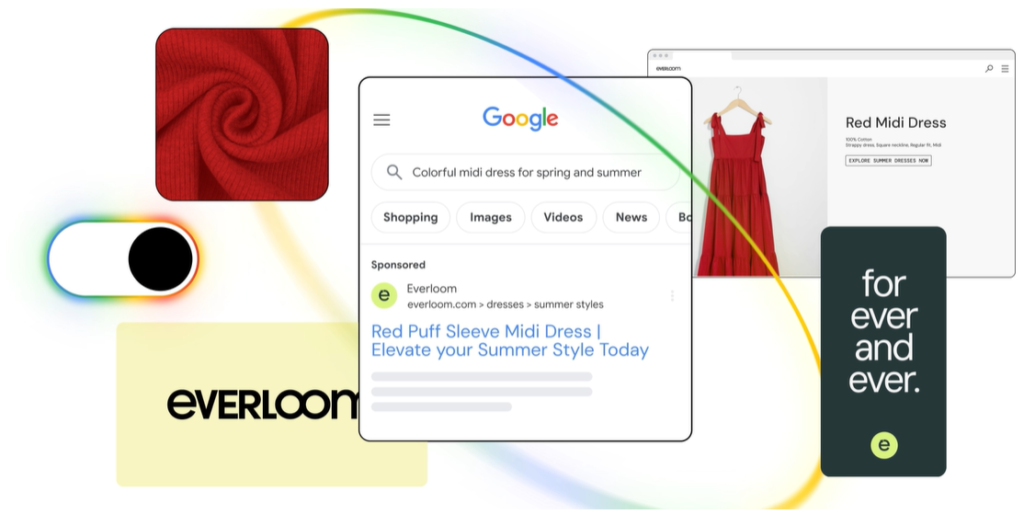
AI Max stays within Search. You still write ad copy. You still set landing pages. You still see search term data. The difference is in matching logic: instead of bidding on specific keywords, you provide Google’s AI with your pages and goals, and the algorithm decides which queries to enter. Think of it as Google taking the wheel on the highway while you still control the destination. That is a meaningful distinction for SMBs who need visibility into what their budget is doing.
What Our Vancouver A/B Test Actually Showed
Test setup
We ran a four-month controlled test for a local service business in Metro Vancouver. One campaign used AI Max. The other used Phrase and Exact match keywords with a mature negative keyword list built from 90-plus days of search term data. Same conversion tracking, same landing pages, same monthly budget allocation.
The numbers
| Metric | AI Max | Phrase & Exact |
|---|
| Clicks | 473 | 655 |
| Cost (CAD) | $4,634 | $7,567 |
| Conversions | 64 | 106 |
| Conversion rate | 13.54% | 16.18% |
| Cost per conversion (CAD) | $72.35 | $71.42 |
| Average CPC (CAD) | $9.80 | $11.55 |
| Unique search terms triggered | 2,741 | 2,027 |
| Impression share | 24.23% | 33.50% |
What the numbers actually mean
The headline that looks good for AI Max is the lower average CPC: $9.80 versus $11.55. The temptation is to read that as efficiency. It is not. A lower CPC reflects lower-intent queries entering the auction. AI Max matched to cheaper searches because it matched to worse searches.
The conversion rate tells the real story. Phrase and Exact delivered a 16.18% conversion rate. AI Max delivered 13.54%. The traffic AI Max generated was cheaper per click because it was less likely to convert.
On impression share, AI Max came in at 24.23% versus 33.50% for the controlled campaign. AI Max did not reach more. The traditional campaign had stronger presence in the auctions that actually mattered for this business.
What AI Max triggered that it should not have
The search term report for the AI Max campaign contained 2,741 unique terms versus 2,027 for the controlled campaign. That sounds like broader reach. In practice, it included 89 variations of competitor brand terms and appeared in auctions alongside storage and logistics companies with no relevance to the service category. The Auction Insights confirmed placements next to businesses that were not competitors in any meaningful sense.
The controlled campaign spent CAD $2,344 on terms that did not convert. The AI Max campaign spent CAD $1,738 on non-converting terms. AI Max generated less waste in absolute dollars, but it also ran on a smaller effective budget because so much of its spend went to lower-intent queries that happened to be cheap.
Key Insight: AI Max did not win this test. It drew roughly even on cost per conversion while generating fewer total conversions, lower impression share in relevant auctions, and significantly more irrelevant search term matches. It is a tool for a specific stage of account maturity, not a default replacement for traditional Search.
When AI Max Makes Sense and When It Does Not
The data from our Vancouver test points to a clear strategic position. AI Max is not a starting point. It is a tool for accounts that have hit the ceiling on traditional Search demand.
AI Max makes sense when:
Your impression share on core keywords is consistently above 80% and incremental CPCs are no longer profitable. The account has 90-plus days of clean conversion data and a mature negative keyword list built from real search term reports. The goal is search term discovery to feed back into a controlled campaign, or brand protection in a saturated auction.
AI Max is premature when:
The account is in its first 60 to 90 days. Conversion tracking has not been verified against real business outcomes. There is no negative keyword list built from actual search term data. Traditional Search impression share is still below potential on core terms.
With the majority of Canadian SMBs planning to increase marketing spend to combat inflation pressure, according to the Constant Contact Q1 2026 Small Business Now Report, the cost of inefficiency scales proportionally with budget. A campaign directing 20 to 40 percent of spend to irrelevant queries is a more serious problem in 2026 than it was two years ago.
The Real Impact for Canadian SMBs
Wasted spend is real but manageable with the right setup
In our test, AI Max generated CAD $1,738 in spend without a conversion. The controlled campaign generated CAD $2,344 in non-converting spend, more in absolute terms but on a larger budget and with terms far easier to identify and exclude. The AI Max waste was harder to control because the matching logic is less transparent.
For Canadian SMBs in competitive Vancouver verticals, immigration consulting, real estate, legal services, home services, the same dynamic applies at higher CPCs. Wasted spend at $15 to $25 CPC compounds faster than wasted spend at $5 CPC.
The CAD-to-USD factor
Canadian advertisers bidding in USD-influenced North American auctions face a structural cost disadvantage when the loonie weakens. AI Max’s broader matching logic can push campaigns into more cross-border auction dynamics. For businesses with domestic-only audiences, tight geographic targeting is essential before enabling AI Max. This is one of the controls our Vancouver test had in place from day one.
What to Do Before Enabling AI Max
Lock down conversion tracking
AI Max optimises toward the goals you give it. If tracking is misconfigured or counting the wrong events, the AI will optimise toward phantom results at scale. Verify primary conversion actions are firing correctly before AI makes matching decisions.
Build your negative keyword library from real data
Export your search term reports and build negatives from actual query categories: informational searches, competitor brands, DIY or tutorial queries, geographic terms outside your service area. This list is your safety net when AI matching goes wider than intended.
Keep a branded exact-match campaign running
AI Max will absorb branded queries without a dedicated branded campaign in parallel. Run branded exact-match separately to protect your highest-converting traffic and keep performance reporting accurate.
Run AI Max alongside traditional Search, not instead of it
Four to six weeks of parallel data tells you how AI Max performs in your specific market before you commit budget to it. For help structuring this kind of test, see our Google Ads management page for Vancouver businesses.
The Bottom Line
AI Max did not replace traditional Search in our Vancouver test. It matched it on cost per conversion, at $72.35 versus $71.42, close enough to call it a draw on unit economics. But it delivered fewer conversions, lower impression share in relevant auctions, and significantly noisier traffic.
That does not make AI Max useless. It makes it a tool for a specific purpose: expanding reach when traditional Search has hit its ceiling, or discovering new search terms to bring back into a controlled campaign. It is not a default upgrade and it is not a migration destination for accounts that still have room to grow with traditional Search.
Google will continue pushing AI Max as the future of Search campaigns. For most Canadian SMBs right now, the data says: run traditional Search well first, and treat AI Max as an expansion layer when you have earned the right to use it.
Connect with Our Experts